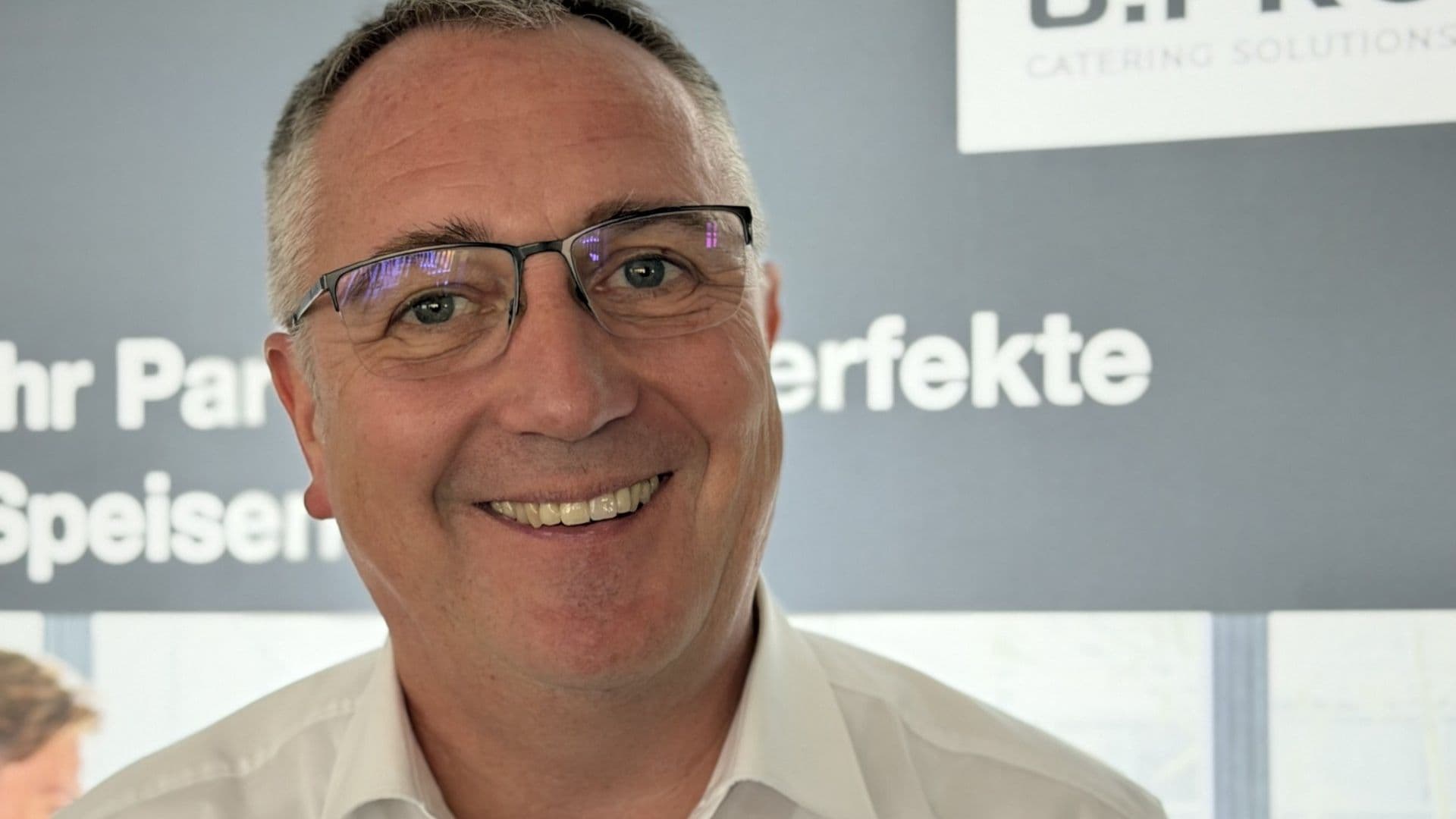
"In Austria, personal relationships are what count"
The four-person team at B.PRO Austria has been supporting its customers for many years, benefitting from a clear understanding of the special features of commercial catering in our neighbouring country. Sales Director Kurt Wankat describes how personal proximity, high quality standards and increasing automation are shaping the Austrian market.
Mr. Wankat, could you please give us a brief overview of B.PRO's Austrian branch?
With pleasure. B.PRO Austria has been based in the north of Vienna since 1992, together with the team from BLANCO Küchentechnik. Before 2007, we used to have our own warehouse. Since then, however, we've been supplied directly by the factories, which has made our processes significantly leaner and more efficient.
Today, the B.PRO Austria team consists of four people. Alongside me, there's one other sales colleague working in the field and two female colleagues in the sales office. I'm personally responsible for office management and sales, particularly in eastern and southern Austria.
Can you give us a brief description of your professional career?
Certainly, I initially studied mechanical engineering at the university of applied sciences (HTL). After that, I spent five years in planning and later worked in sales for butchery and bakery equipment. At B.PRO, I've been combining my technical background with knowledge from the food industry for 31 years now.
What are the distinguishing features of the commercial catering market in Austria?
Austria is a manageable market compared to Germany. This is both a blessing and a curse. On the one hand, there are simply fewer potential customers. On the other hand, contact is often very close in existing business relationships. In fact, I'm on a first-name basis with around 95 percent of my customers, some of whom I've been supporting for half my professional life. It's not just about budgets, technology or tenders, but also about personal issues. People ask about family and talk about personal developments. This is simply a matter of course in Austria. Sometimes I almost feel like a psychologist. (laughs)
How else would you characterise the typical Austrian customer?
Well, personal relationships are accompanied by high expectations. Our customers want fast, clear and preferably tailored information. If they can't reach their contact directly, they quickly become impatient.
That's why it's important to us here at B.PRO Austria that not only the Sales department but also the back office is closely involved. Our colleagues know the projects in detail and are always able to provide information. This ensures that our customers receive professional answers even when I'm on the road. The standards are high – but that's precisely what makes the collaboration exciting.
What other differences are there between the German and Austrian markets?
Food enjoys a particularly high status in Austria, and pride in regional products is very pronounced. The level of quality in commercial catering, especially at hospitals, reflects this. It can be seen in the selection, portion sizes and freshness of the products. German colleagues are often surprised by how much emphasis is consistently placed on variety and artisanal cuisine here.
External catering is definitely the exception. The reputation of an establishment also depends on the food it serves. When patients say: "the food was good", this is part of the overall perception. Accordingly, people are also sensitive to changes. A few years ago, the mere headline that a German company could supply hospitals in Graz with frozen food caused considerable discussion. The idea of buying food on a larger scale was viewed extremely critically.
What role does economic pressure play?
Well, it's obviously growing, just like in other countries. In many Austrian commercial kitchens, the key question now is what should be prioritized: regionality or organic quality. However, legal standards in the food sector are very strict anyway, so the quality is already at a high level even without organic certification. The challenge therefore lies in maintaining this level, even when operating under tighter economic conditions, especially since qualified chefs are becoming harder to find.
Which product areas or concepts from B.PRO are currently generating particularly high interest – and why?
Well, this brings us neatly back to food again, specifically school catering. Despite a tight budget, the city of Vienna, for example, has been consistently investing in the expansion of all-day schools for many years. Vienna was among the first cities to offer a hot lunch across the board as a result.
This led to high demand for our BASIC LINE Kids modular food serving line, which is characterized, for example, by a lower serving height and rounded edges on the sneeze guard. At the special request of Vienna City Council, we also developed the diagonal module of the BASIC LINE Kids. This facilitates efficient use of the food service area from both sides and is also designed to be inclusive, so that children of various age groups and wheelchair users can participate on an equal basis.
How important are automation and digitalisation in Austria?
Extremely important. We're receiving a lot of inquiries right now. For example, we're currently automating food distribution on two conveyor belts at the University Hospital St. Pölten. Not only will trays, menu plates and wrapped cutlery be automatically positioned in future. Thanks to Smart Tray ID, the water-soluble labels containing the menu information are printed directly onto the tray and read by the employees on the conveyor belt via monitor to simplify the loading process.
In Wels, we're working on a project that will make it possible to automatically remove trays from the transport trolley and load plates into the dishwasher. This also compensates for the glaring staff shortage that we've been experiencing at hospitals, not least since the coronavirus pandemic.
You're now 58 years old. Is the hunger still there?
Without a doubt. For me, customer satisfaction remains the greatest motivation. I still get a kick out of planning a food service or distribution system together with customers using the 3D configurator and to see step-by-step how an idea becomes a concrete concept. The moment when the result exactly matches expectations – or even exceeds them – is particularly satisfying.
As a trained mechanical engineer, I'm also delighted to be able to help drive forwards the topic of automation – I really like the technical aspect of the whole concept. I'm also convinced that this presents a great opportunity for B.PRO. Yes, there are many providers in the field of automation. However, our key advantage is that we combine this expertise with sound knowledge of the processes in commercial catering – supplemented by intensive and personal consulting and support. Precisely this combination is what makes the difference.
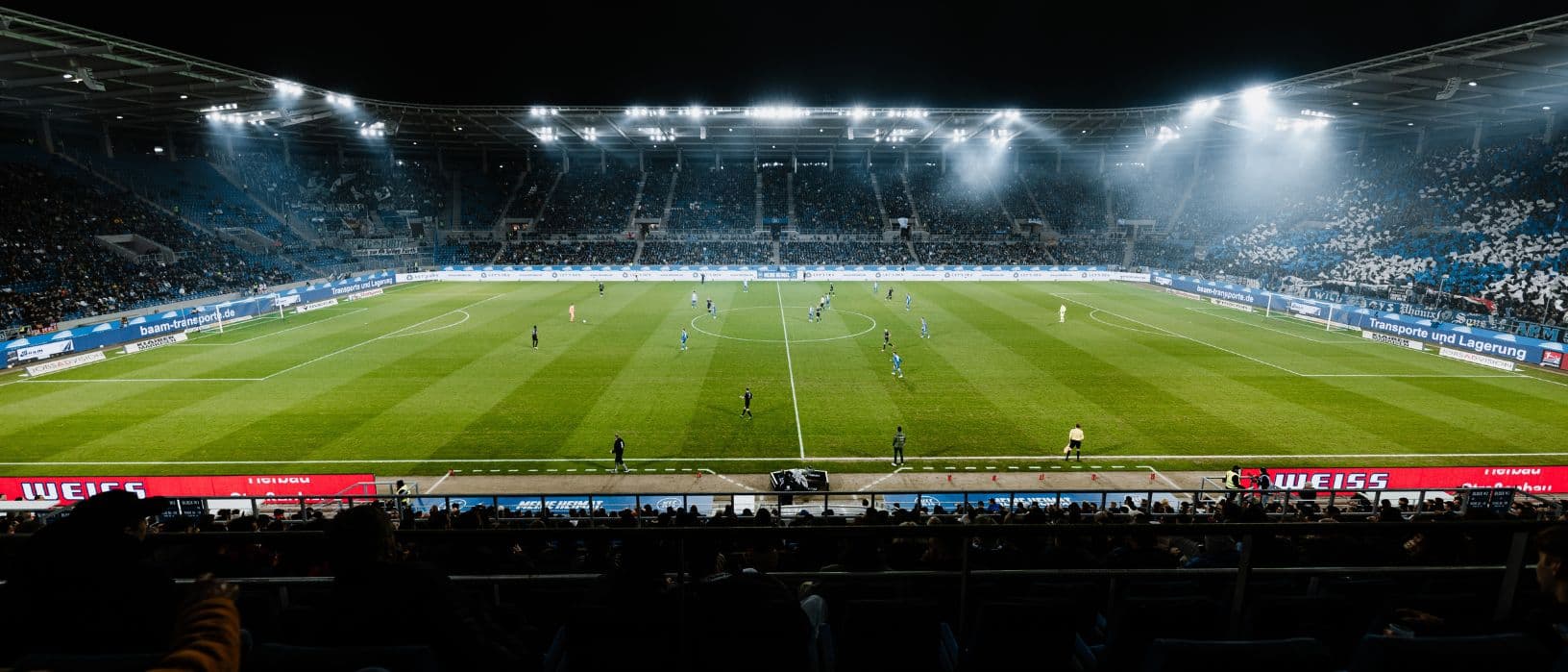 B.PRO and football – a perfect team effort
When the whistle blows in the stadium, a logistical masterstroke begins behind the scenes: Kitchen teams have to cater for hundreds or even thousands of guests at very short notice, reliably and flexibly. B.PRO has been supplying the right catering equipment for this for years and has thus established itself as a sought-after partner in professional football
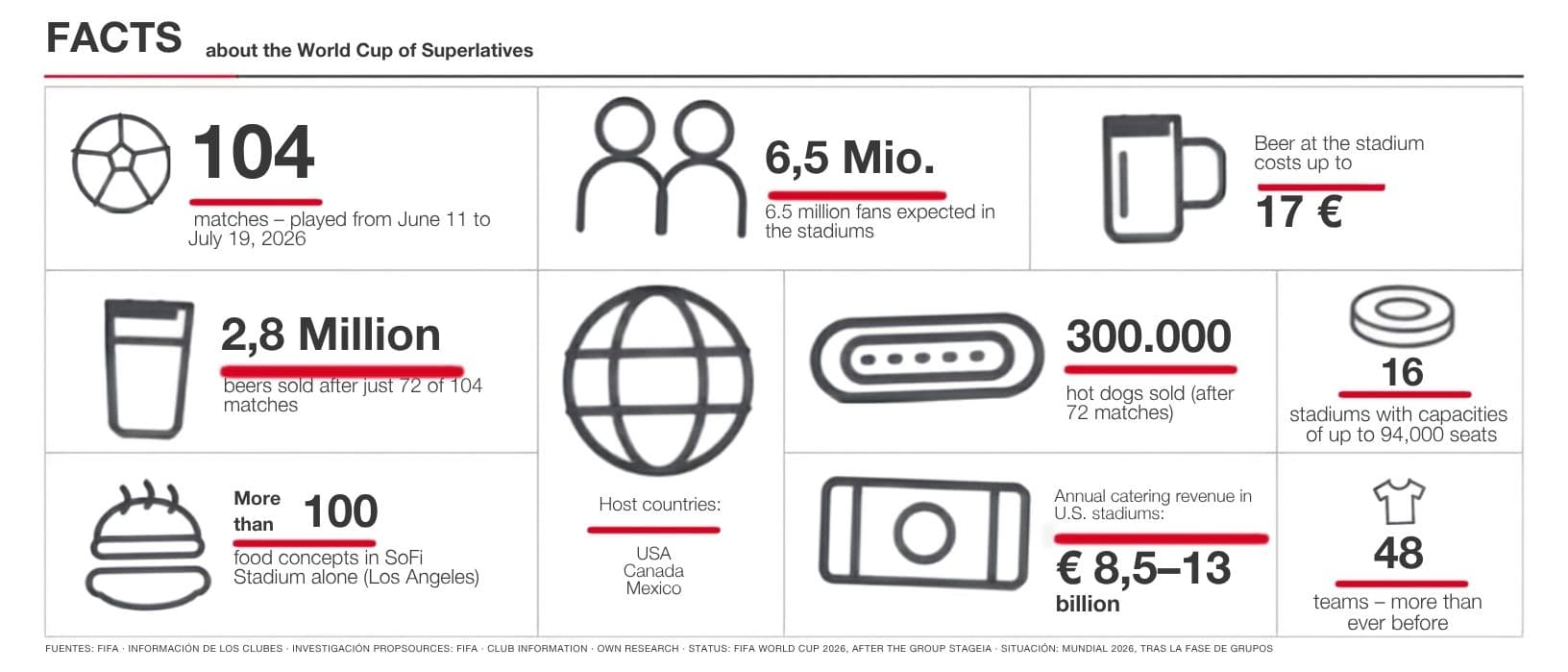 World Cup catering in numbers
104 matches, three countries, more fans in the stadiums already than expected: The 2026 World Cup is the biggest football tournament in history – and in catering and hospitality too, new benchmarks are currently being set there. B.PRO provides an overview of the key figures and facts on World Cup catering
 World Cup 2026 - Challenges and Opportunities in event catering
The 2026 FIFA World Cup is intensifying a trend that has long been noticeable in event catering. Factors such as fluctuating guest numbers and rising costs turn every event into an operational calculation exercise. But there are solutions