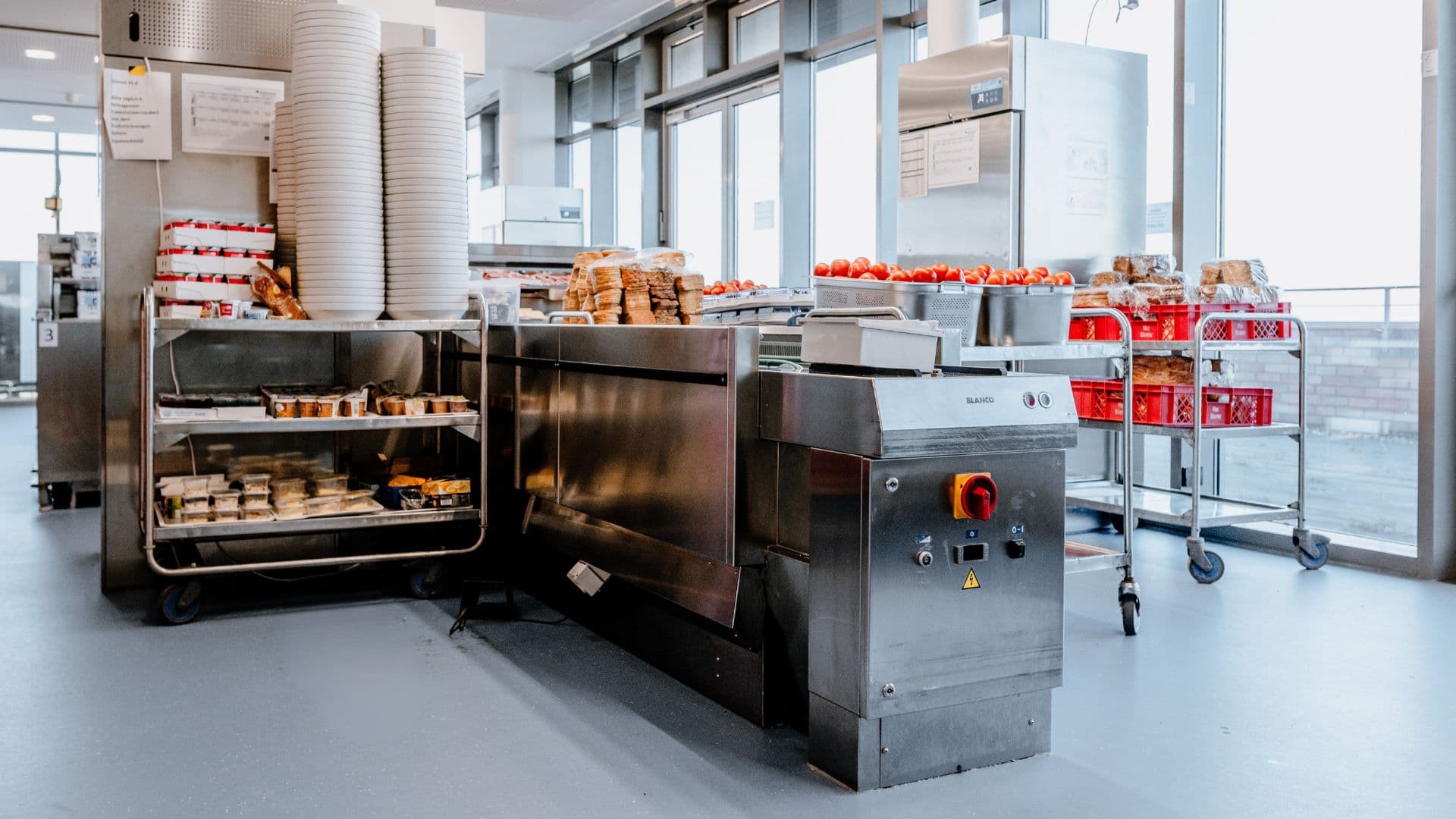
More automation, less tension: How the food distribution conveyor can cushion the shortage of skilled labour
Clinics have long felt the shortage of skilled labour in the kitchen. While staffing levels are getting thinner, food distribution conveyors need to keep up with the pace. Automation makes a valuable contribution here.
According to the Skilled Labour Monitoring Report 2026 of the German Hospital Federation (DKG), staff shortages at clinics remain a structural issue. Added to this is the fact that around 300,000 employees are set to reach retirement age by 2035. In many places, the gap cannot even be closed as things stand today. At the same time, the demands on the quality and cost-effectiveness of both patient and guest catering are increasing.
This pressure is immediately visible at the food distribution conveyor: Several hundred trays have to be filled with different types of food in a short space of time, taking into account special diets and allergies. Any mistake or incorrect portion here has a direct impact on patients and guests.
Everyday life working at the conveyor: Where staffing gaps are particularly painful
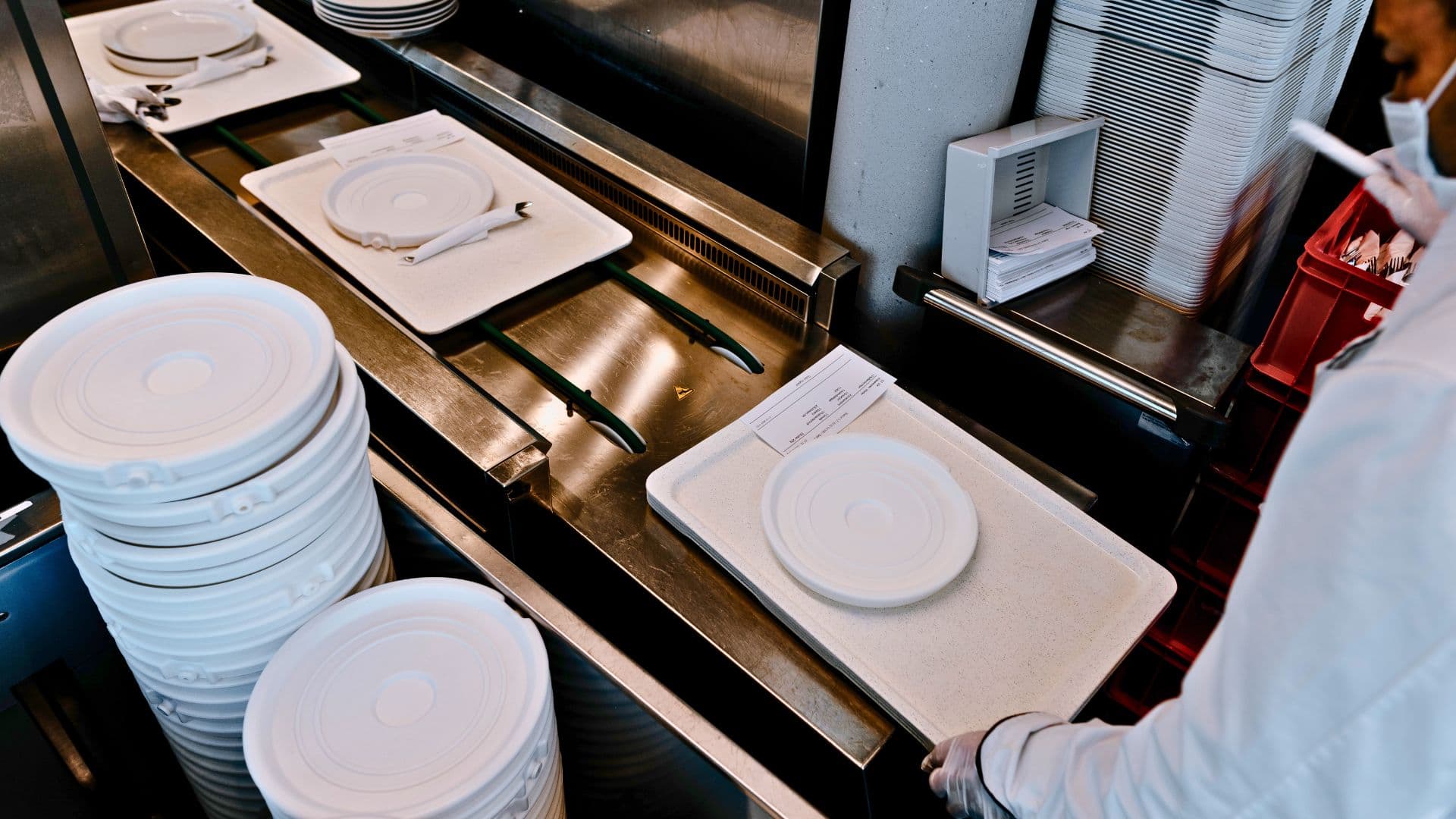
Many processes at the conveyor are still characterised by manual work: Trays, china, components and transport trolleys are all moved and loaded manually here.
At the same time, the jobs are physically demanding and therefore only attract a relatively small talent pool in the competition for skilled labour. Accordingly, the teams increasingly include career changers and people with various levels of language proficiency, which makes familiarisation and coordination even more difficult. "At the conveyor belt, just a few seconds can determine whether the entire process remains stable or comes to a halt," explains Lennart Scherf, automation system consultant at B.PRO. "In this area, however, it is particularly important for processes not to depend on whether the most experienced team is on duty today."
The central question is therefore: How can the food distribution conveyor be organised in such a way that it remains manageable, even when understaffed or working with changing teams?
Automation as a three-level system
B.PRO has identified key points to make work more efficient and more robust in terms of personnel. An overall concept for the line has been created that combines three levels: digital clarity, mechanical relief and greater stability at the conveyor.
Digital clarity: SmartTray ID and SmartDisplay support
It all starts with the digital identity of the tray. With SmartTray ID, each tray receives an individually printed label with a QR code directly at the food distribution conveyor. This puts an end to paperwork and manual map logistics. All relevant information is then available digitally and clearly assigned to the respective tray. Label printing at the conveyor automates a previously time-consuming and error-intensive element, while the label is automatically removed from the tray without leaving any residue later on during the dishwashing process. The result: less effort on a day-to-day basis and comprehensible decisions at the conveyor.
SmartDisplay support makes the SmartTray ID information visible at the conveyor belt. The solution works by accesses the existing menu ordering systems and reading the data stored there. On this basis, the portioning stations display precisely those components that are intended for the tray that is currently arriving.
"At first, some hospitals prefer to have the familiar patient card on the screen one-to-one," explains Lennart Scherf. "Others clearly rely on images, as these help them overcome any language barriers. We can do both – text, images or a combination of the two – and adapt the visualisation to the team and process on site."
For the employees working at the conveyor, this means clear guidelines at eye level rather than having to search for dietary abbreviations.
Mechanical relief: Automated feed and discharge, right through to the storage robot
The second level of automation is aimed at activities that require a lot of energy and time. An automatic feeder places trays from the transport trolleys onto the belt in a controlled process. In addition, placement modules are used to load the trays with china and cutlery, while a feeder station automatically places standard components such as butter or jam on the trays. In future, a storage robot will also remove the trays from the conveyor and store them in the transport trolley.
This significantly reduces the need for basic manual movements. The minimum number of personnel required at the conveyor is reduced, and routine tasks are made noticeably easier.
Process stability: When technology cushions staff absences
For automation to work on a day-to-day basis, processes must be adapted to the team available. The B.PRO conveyors can be operated at a speed of 2.5 to 12 metres per minute, allowing the cycle to be slowed down or accelerated in a targeted way without disrupting the rhythm of the process.
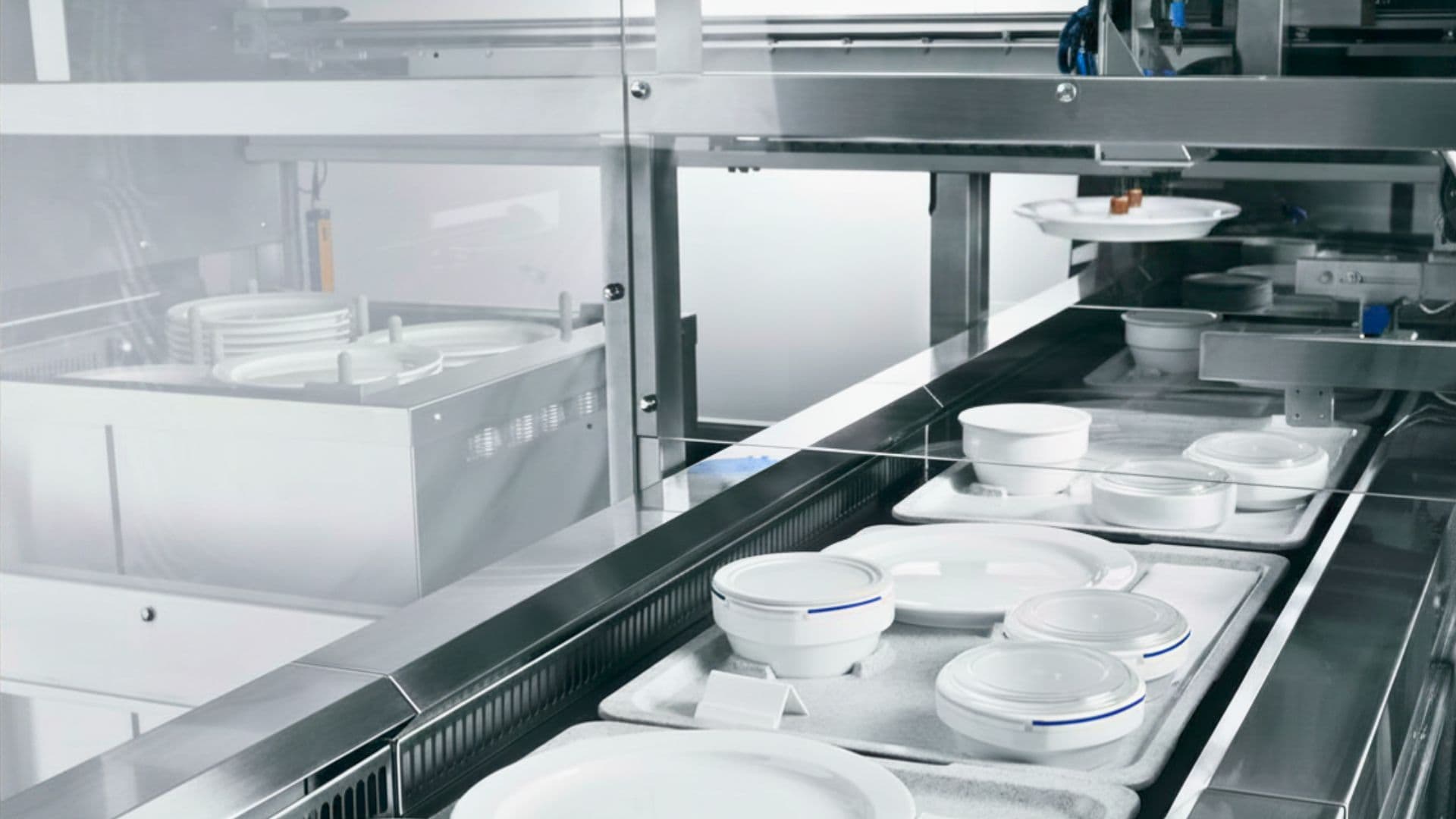
In the cook-&-chill process, the RSPV UK convection-cooled distribution conveyor also ensures that the cooling chain is maintained. A cooled air curtain keeps the food on the conveyor within the HACCP-compliant temperature range, even though a pleasant ambient temperature is maintained for staff to work in. This eliminates the need for additional inspection work or a separate refrigerated portioning room.
Less manual intervention and reworking reduces disruptions to the process – an important advantage in tense personnel situations.
Tackling the skills shortage strategically – bit by bit
As the staffing gap at clinics will certainly not fix itself in the coming years, automation at the food distribution conveyor is an important strategic component. It ensures that existing experience is used in a targeted way where it brings the greatest benefit. This makes the jobs themselves more attractive.
It is OK to start small, for example with the digitisation of information channels using SmartTray ID and SmartDisplay support. Further automation steps can then be added later on, as and when required. This approach gradually establishes an ecosystem that noticeably cushions the shortage of skilled labour and makes processes more reliable.
If you would like to unleash the full potential of your line, please contact us. We will be happy to show you suitable expansion stages for your kitchen.
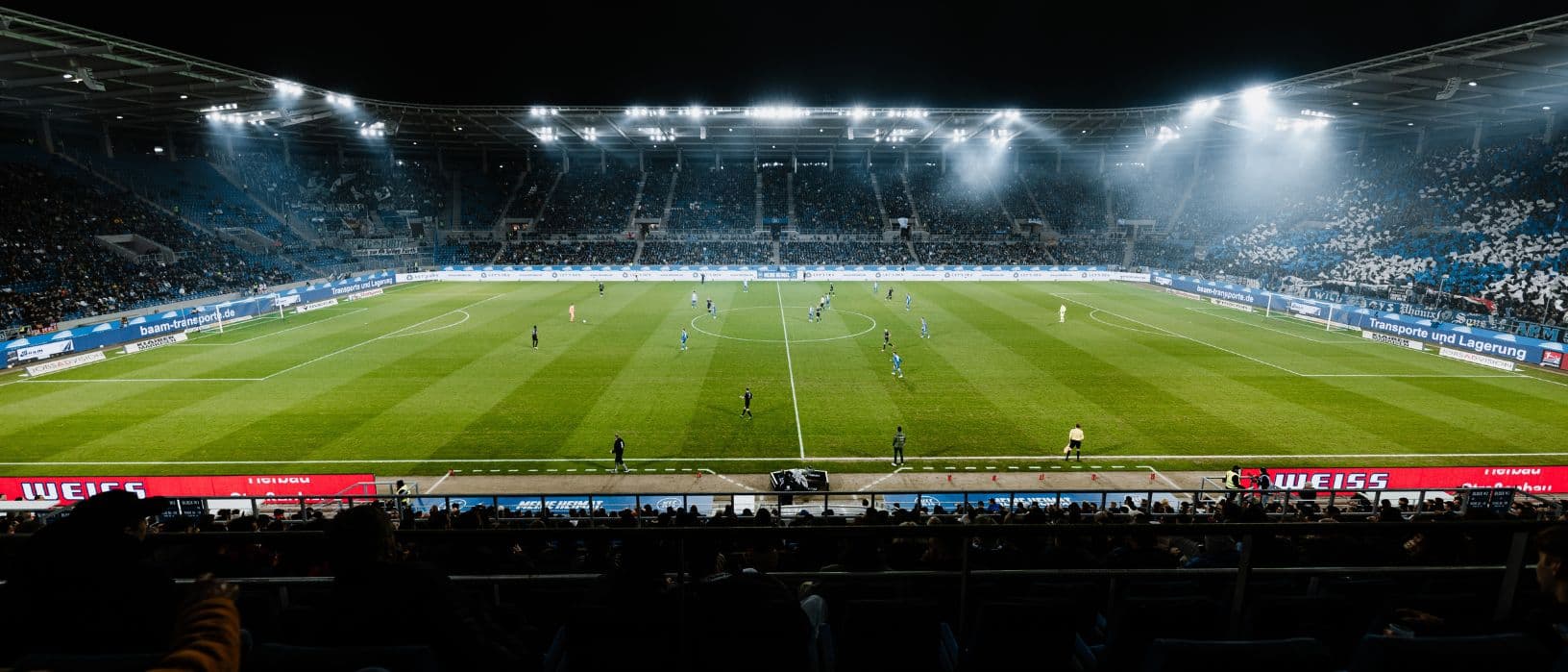 B.PRO and football – a perfect team effort
When the whistle blows in the stadium, a logistical masterstroke begins behind the scenes: Kitchen teams have to cater for hundreds or even thousands of guests at very short notice, reliably and flexibly. B.PRO has been supplying the right catering equipment for this for years and has thus established itself as a sought-after partner in professional football
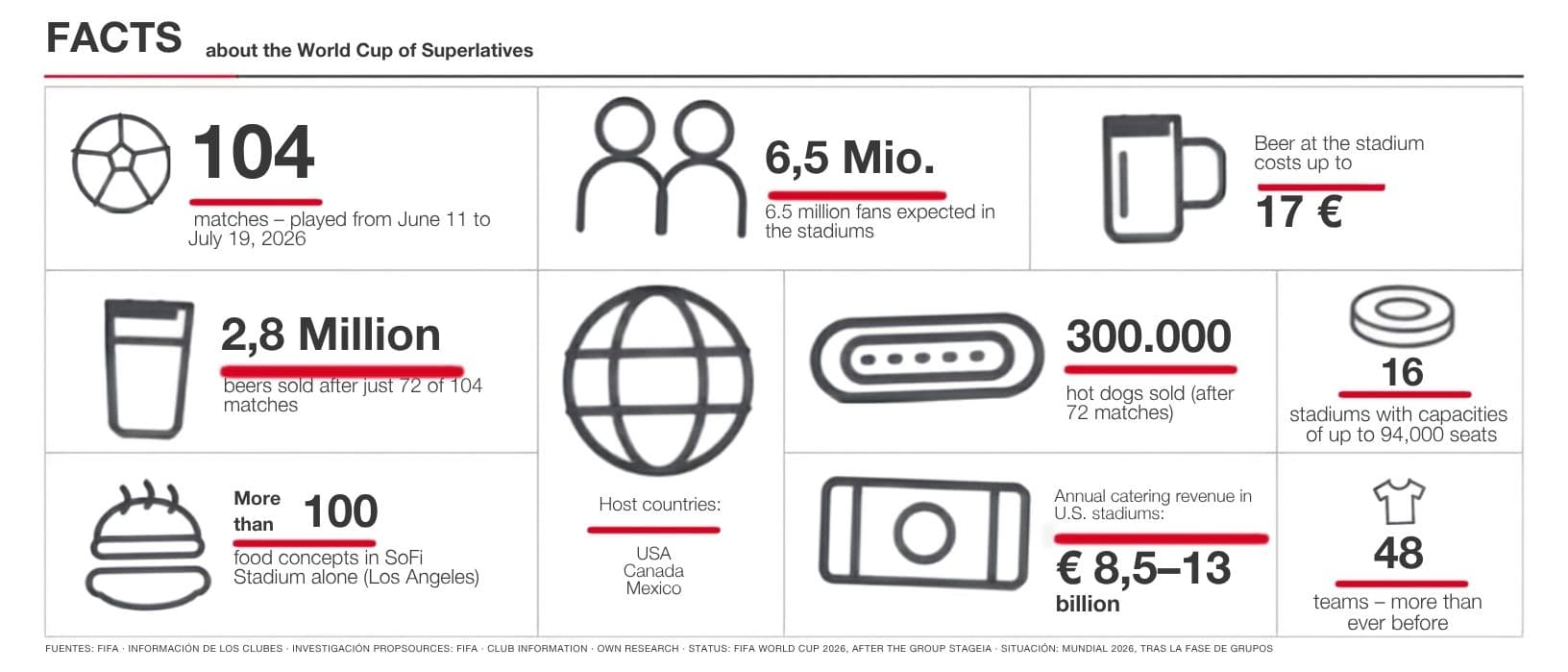 World Cup catering in numbers
104 matches, three countries, more fans in the stadiums already than expected: The 2026 World Cup is the biggest football tournament in history – and in catering and hospitality too, new benchmarks are currently being set there. B.PRO provides an overview of the key figures and facts on World Cup catering
 World Cup 2026 - Challenges and Opportunities in event catering
The 2026 FIFA World Cup is intensifying a trend that has long been noticeable in event catering. Factors such as fluctuating guest numbers and rising costs turn every event into an operational calculation exercise. But there are solutions