Record revenues and luxury prices
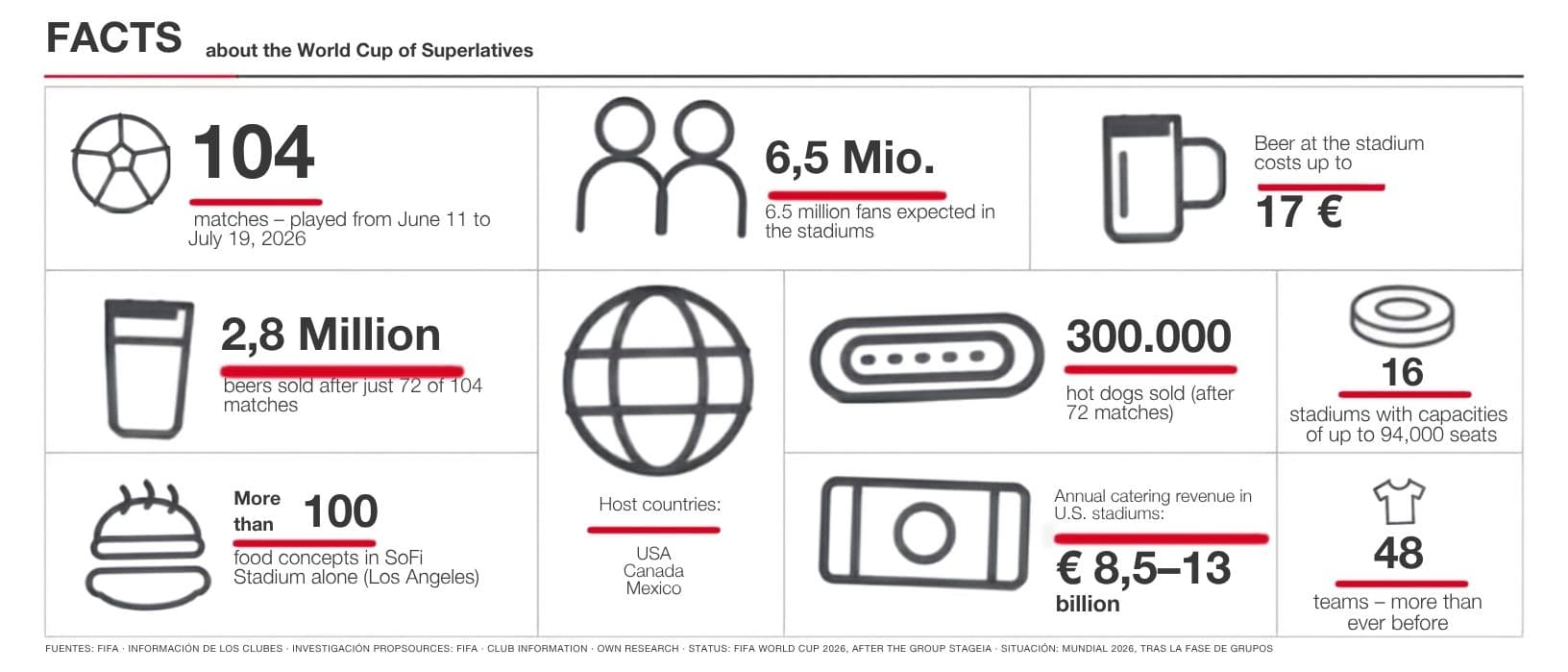
104 matches, three countries, more fans in the stadiums already than expected: The 2026 World Cup is the biggest football tournament in history – and in catering and hospitality too, new benchmarks are currently being set there. B.PRO provides an overview of the key figures and facts on World Cup catering
German engineer Thomas Schüller shakes his head. He is currently standing at the drinks counter to buy a beer for the group match “Germany – Ivory Coast” in Toronto. The price: 24.25 Canadian dollars – the equivalent of around 17 euros. “Back home, it costs three times less,” says Schüller. But it is not only in terms of price that the 2026 World Cup is in a different league when it comes to catering and hospitality.
Between 300,000 hot dogs and the “Saffron-infused Tostada”
As is well known, the tournament breaks through classic World Cup dimensions: For the first time, 48 teams are competing in 104 matches across 16 venues in three countries for the title. In advance, FIFA had expected around 6.5 million fans in the stadiums; after the group stage, attendance figures were already at more than 4.6 million. Naturally, all these people also need to be fed. After just the first 72 World Cup matches, the world football governing body reported 2.8 million beers sold and almost one million bottles of water sold. In addition, 300,000 hot dogs were sold over the counters.
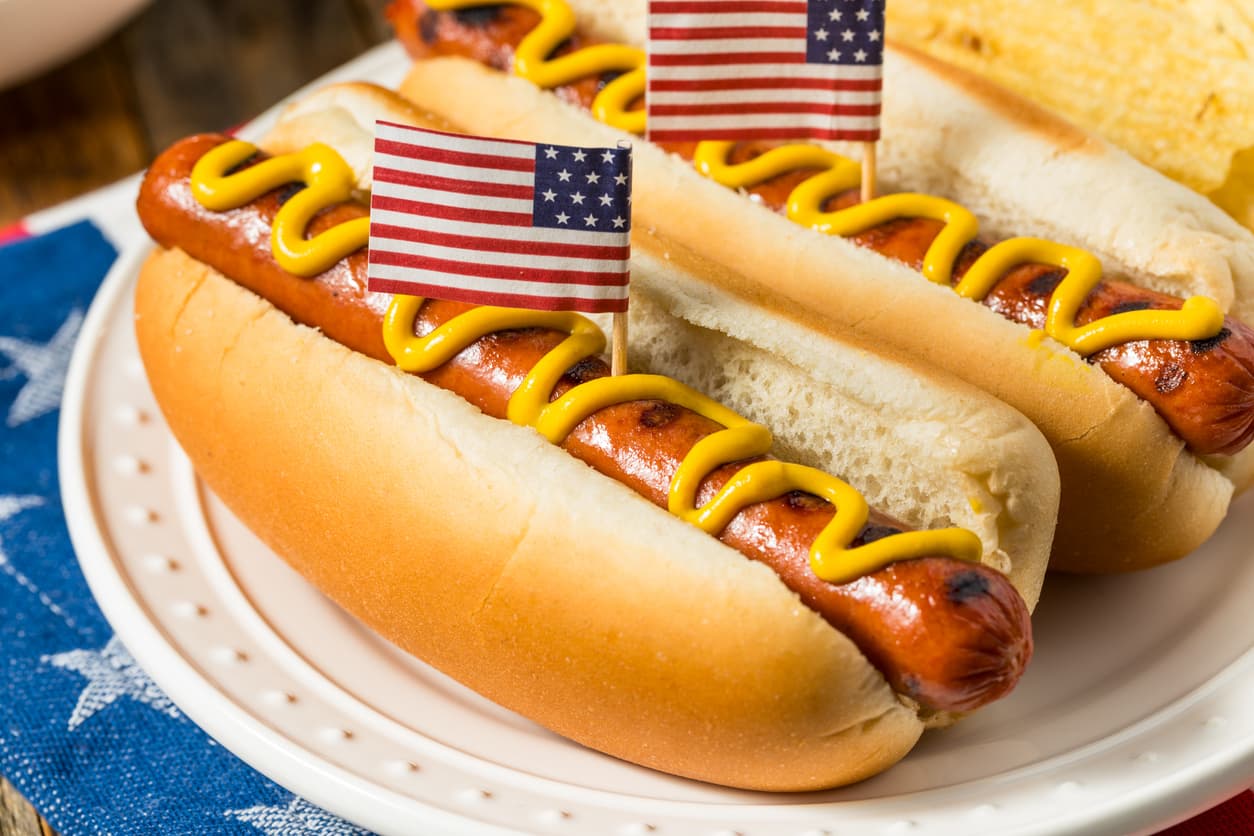
However, the selection is not limited to this classic. At Los Angeles’s “SoFi Stadium”, for example, there are more than 100 food concepts, including local specialities, barbecue and modern street food concepts. The signature dishes there include the “Twinkie Cheeseburger” (22 dollars); in Vancouver, Canada, it is the “Maple Smokie Dog” (16.25 dollars), and in Mexico City, the “Saffron-infused Tostada” (14.50 dollars).
Billions in revenue thanks to food and drink
Catering and hospitality are key revenue drivers for those responsible – even before the Football World Cup. In US stadiums alone, annual revenue amounts to 8.5 to 13 billion euros, not including hospitality offerings or sponsorship – food and beverage sales play a key role in the arenas’ financial results. Per-capita spending is therefore typically two to three times higher than in Germany. For the current tournament, tourism spending of around 6.4 billion US dollars is expected in the USA; according to estimates, just under a third of this is likely to be spent on food and drink.
A football experience with a bitter aftertaste
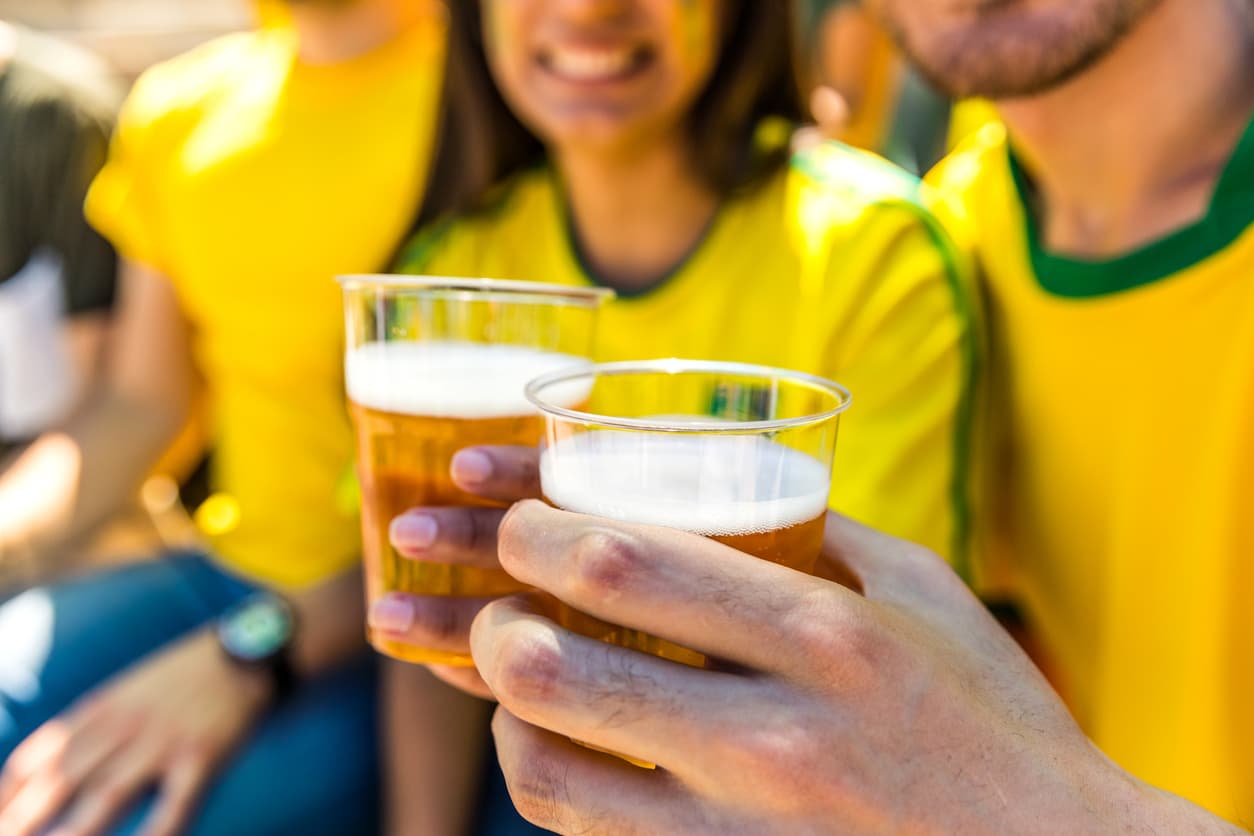
Beer is and remains the most popular drink at the football experience. But looking at the prices is likely enough to take away many people’s thirst. In many US stadiums, some prices during the World Cup are significantly above the usual level: At LA’s “SoFi Stadium”, for example, half a litre costs between 16 and 17 dollars – figures that are also found in the most expensive World Cup arenas in Canada. However, the burden on fans is particularly clear in Mexico City, where a beer costs around 310 pesos – almost an entire day’s wage, as the statutory minimum wage there is just over 315 pesos (around 18 dollars).
The situation is similar with food. At Germany’s match against Curaçao in Houston, a hot dog cost just under nine US dollars. In other arenas, chips can cost more than 17 euros, and special creations such as the “Caviar topped Tater Tots Tray” from Miami come in at more than 75 dollars.
A fan-friendly exception in Atlanta
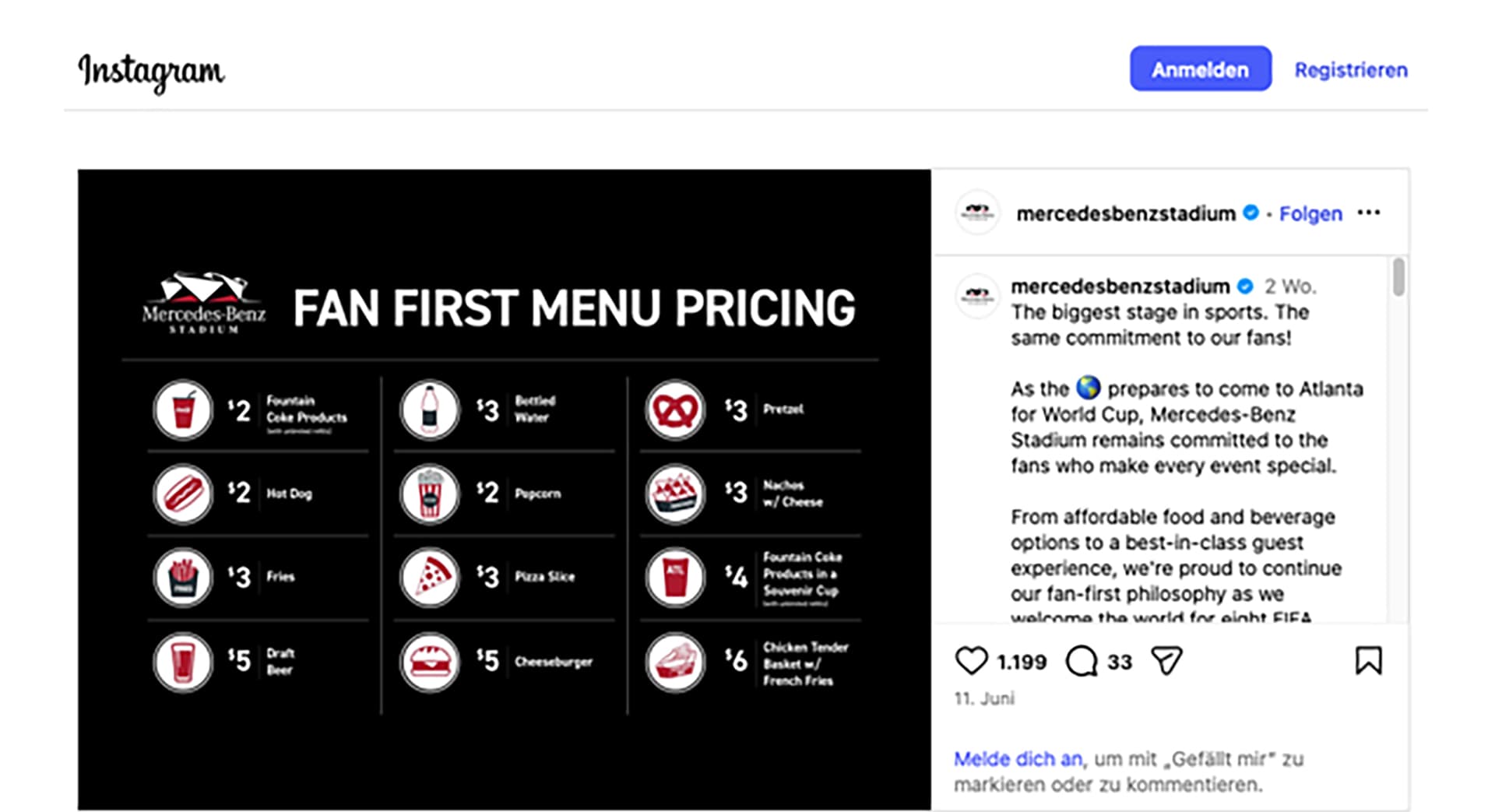
One exception is the “Mercedes Benz Stadium”, which is called “Atlanta Stadium” during the World Cup: here, the so-called “Fan First Menu Pricing” still applies during the World Cup – geared towards an affordable stadium experience rather than maximum revenue. A 0.35-litre beer costs 5 dollars here, and a simple snack such as a hot dog is priced at 2 dollars.
Now those are prices that many fans are likely to appreciate.
Source: https://www.instagram.com/p/DZcqE-MlngL/?utm_source=ig_embed&ig_rid=A2HmI8ep3tiSe8P8F3N-TVP
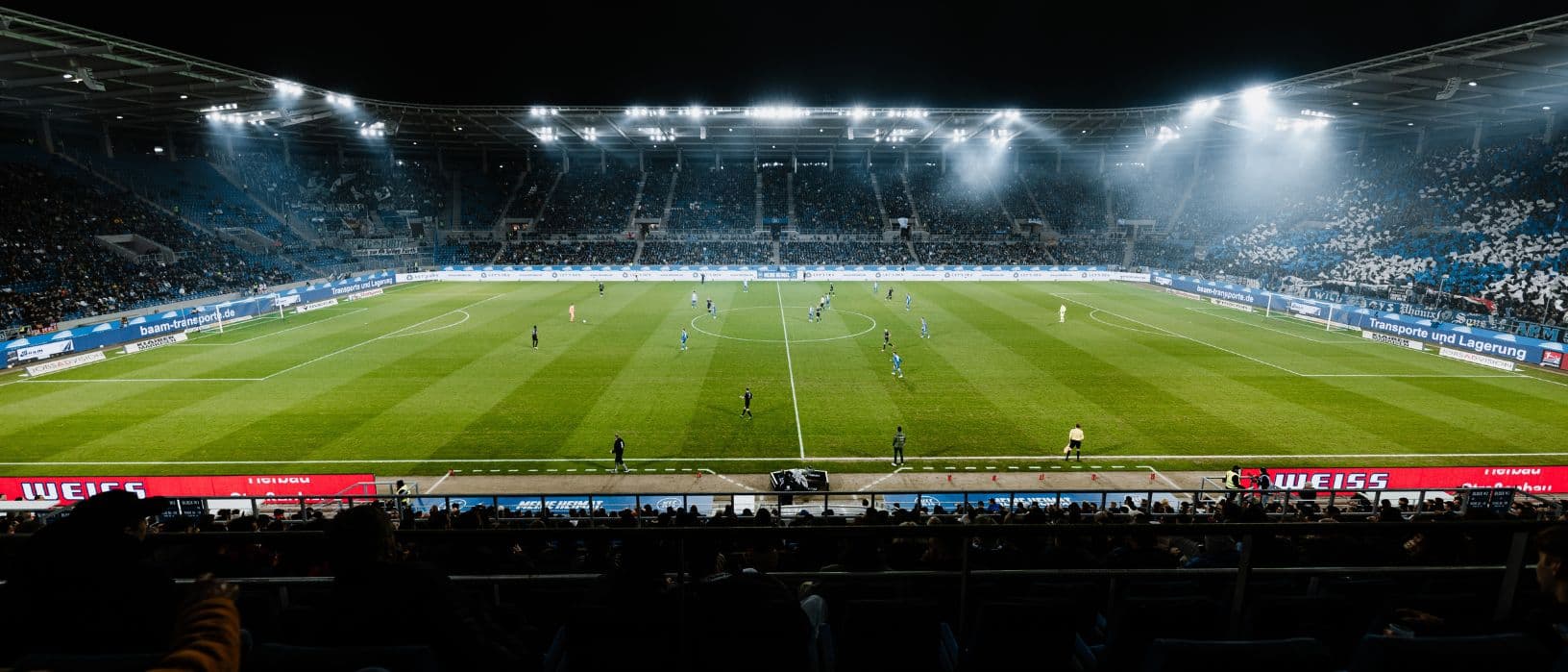 B.PRO and football – a perfect team effort
When the whistle blows in the stadium, a logistical masterstroke begins behind the scenes: Kitchen teams have to cater for hundreds or even thousands of guests at very short notice, reliably and flexibly. B.PRO has been supplying the right catering equipment for this for years and has thus established itself as a sought-after partner in professional football
 World Cup 2026 - Challenges and Opportunities in event catering
The 2026 FIFA World Cup is intensifying a trend that has long been noticeable in event catering. Factors such as fluctuating guest numbers and rising costs turn every event into an operational calculation exercise. But there are solutions
 World Cup 2026 Snapshot with Luis Nunez
In his role as District Manager at Aramark Sport & Event Catering, Messe Stuttgart / MHP Arena Stuttgart, how does Luis Nunez view the 2026 FIFA World Cup?